Showing posts with label PCP's Movie Picks. Show all posts

Saturday, January 6, 2018

PCP's Movie Pick of the Month for January: Breaking the Ice (2014)

As some of you probably already know, the 2018 Winter Olympics is starting next month. The best Olympic stories, in my opinion, are the underdog stories. We all know Michael Phelps is going to win a ton of Gold medals, it's just a question of how many. I'd rather hear about Mo Farah, the runner from the U.K. who fell during the 10,000 metre race, only to get up and win a gold medal at the Rio Olympics in 2016, or Eric Moussambani, the swimmer from Equatorial Guinea who won his first heat at the Sydney Olympics in 200, despite never seeing an Olympic sized swimming pool because the other competitors were disqualified for starting early. However, it was the first attempt of the Jamaican Bobsled team, who qualified for the 1988 Winter Olympics in Calgary that defied the most expectations.


Breaking the Ice (2014)

"Anyone can accomplish incredible dreams and if they dare to dream extraordinarily, and have the equal desire to go after them." - Devon Harris.


Breaking the Ice is a short documentary that tells the true story of the first Jamaican Olympic Bobsled team’s journey to the 1988 Winter Olympics in Calgary. This story caught the world by storm and was made into a blockbuster hit movie Cool Runnings a few years later. This movie became massively successful worldwide. While Cool Runnings was highly factionalized and problematically whitewashed for Western consumption (that is to say softened, “easier to understand” accents, lots of stereotypical jokes about Caribbean folks in the cold, and cartoonish characters with funny names), Breaking the Ice  tells the true version of the story and is, in my opinion, actually more interesting to watch. It follows the initial efforts to create a Jamaican Bobsled team by an American businessman, the recruiting of a military helicopter pilot Dudley Stokes, and three sprinters, Devon Harris, Michael White, and Freddy Powell, and their trials and tribulations through the bureaucracy that almost prevented them from competing. In the end they displayed serious athletic talent, impressed the Bobsledding establishment, and won over fans around the world with their underdog spirit. They did crash during their final run, and as a result did not medal, but they gained the respect of fellow competitors and showed that they were not as out of their depth in the sport as initially believed.


 The parallel between this film and YMT is the theme of defied expectations. The Jamaicans were not your typical Boblsled team. The Jamaicans fought to get accepted in the Bobsled world. They were consistently underestimated and not taken seriously by the establishment, but persevered and were eventually accepted as legitimate competitors. In 1994, they returned to the Olympics and although they didn’t medal, they placed higher than both Teams USA and Russia. It’s a true story of competitors who “didn’t belong” gaining the respect of their peers through hard work and determination. YMT’s story has similar themes on a different scale. We are not your typical Muay Thai competitors. We have our roots in York University’s Muay Thai program, founded by Kru Jenypher in 2006. We were a small class in the basement of York U's gym with no heavy bags and very little equipment, that anybody with a student card could sign up for and as a result we were seriously underestimated. The Muay Thai community did not think that a group of nerdy university students with a female Kru could create strong competitors, or any sort of force to be reckoned with. They were wrong. We slowly developed and eventually outgrew our space. We moved to our current location in 2010, but the old reputation stuck. But we took ourselves seriously and dug in hard. Flash forward to today and everybody in Ontario knows that if they have an opponent from York Muay Thai standing across from them, they’re going to have a rough night. We won 3 gold medals at this years Nationals, 2 at provincials. We sent a competitor to IFMA. The Wall of Champions is running out of space. 

Not bad for a bunch of nerdy university students.


Breaking the Ice can be viewed online at: http://www.sportsonearth.com/video/v31365693/the-true-story-of-the-1988-jamaican-bobsled-team

Friday, June 16, 2017

PCP's Movie Pick of the Month for June: Lone Survivor (2014)

Ok, this month's pick is a little more serious than the last one. Violence is about the only thing that this pick has in common with Ninja Assassin, however the violence in this one is significantly more unsettling. Lone Survivor is one of the most visceral war movies that I've ever seen. It's certainly not without its flaws (it just barely stops short of being ultra-pro-American war propaganda). It does not examine the morality of the war in Afghanistan and if the Americans should have been there in the first place, but observed through the lens of a survival story it illustrates what a well trained mind is capable of doing.

Lone Survivor (2014)


"We're all shot, bro. Can you fight?" - Marcus Luttrell. 


Peter Berg's Lone Survivor depicts the true story of a military operation in Afghanistan that went very wrong. It is based on the book Lone Survivor by Marcus Luttrell, who himself survived the calamitous event by sheer force of will, grit, and determination. The film remains faithful to his account of the situation (that is to say the enemy in the film is not exactly portrayed as 3-dimensional characters). It doesn't pull its punches when it comes to showing the brutality of war and the amount of punishment that a mentally tough person can take and still manage to push through and survive.


Mark Walhberg, Taylor Kitsch, Emile Hirsch, and Ben Foster portray a 4-man SEAL team that was sent to kill or capture a senior Taliban commander in the Hindu Kush region in 2005. A series of uncontrollable events leads the team to a serious ethical dilemma. First, they discover that the region is significantly heavier guarded than they briefings had lead them to believe, with several hundred Taliban soldiers present rather than a dozen. Second, they find themselves in a dead zone for their radios, cut off from their commanders who could provide support to them. And finally, by pure chance of bad luck, the team is discovered by a farmer and his two sons before they come close to completing their objective. This leads to a moral argument between the four men on how to deal with the situation; their options being to protect themselves first and kill the civilians, committing a war crime in the process, or releasing them and running the risk of the much larger Taliban army being alerted to their presence should the farmers report on their whereabouts. After serious consideration of the consequences of murdering them vs. the consequences of releasing them (an argument which saves this film from being propaganda in my opinion, as it portrays some of the team members as considering committing a war crime, a discussion the actual military might not be too fond of), the SEALs decide to go with the second option and let the farmers go, abort the mission, and attempt to withdraw from the area on foot. This leads to a prolonged gunfight between the SEALs and the mobilized Taliban forces, with tragic results. It's no spoiler to say that, in a movie called Lone Survivor, not everybody makes it. 


At times, Lone Survivor reminds me of 127 Hours, a movie pick from last year, in that it focuses on the reservoir of mental toughness that a specific individual had to draw from in an extraordinary situation. The big difference, however is that 127 Hours depicts a regular Joe in a survival situation, Lone Survivor depicts the resilience of four above average men who's minds and bodies were hardened by one of the most intense military training regimes in existence. In the face of extreme adversity, bodily harm and almost certain death, they are portrayed as remaining composed, collected, and acting decisively. There is no panic. This is best illustrated by the calculated manner in which they approach the decision to jump off a 20 foot cliff rather than face 200 Taliban head on. They make a quick decision regarding their survival and none of them hesitate for a second. This sequence is 30 seconds long, feels much longer to watch, and results in bruises, broken bones, and serious bodily harm to all of the main characters. It is a testament to the feats that a well trained, mentally tough person is capable of. And therein lies the parallel between Lone Survivor and the sport of Muay Thai. An elite level Muay Thai fighter does not start out that way, rather they are crafted through a rigorous training regime and battle experience. There is nothing natural about it. Some people are definitely not cut out for it and many fall off along the way. But mental and physical toughness are things that can be trained. You can push yourself farther than you know. Learn to be skilled, train to be strong and eventually, a true warrior will be created. 

This movie is available on Netflix. Give it a watch if you're not squeamish seeing blood or broken bones. 
 
The opening sequence of the movie shows documentary footage of the so-called "Hell Week" that 
SEAL prospects have to complete in order to be admitted to their training program.


Saturday, April 22, 2017

PCP's Movie Pick of the Month for April: Ninja Assassin (2009)


Ninja Assassin has a little something for everybody. And by that I mean it has a several scenes where a group of army guys fight a group of ninjas. I would suggest this movie to anybody who likes big dumb martial arts movies. It's by no means a "good" movie. It didn't exactly get robbed at the Oscars that year, if you catch what my dogs are barking at. It probably doesn't have the strongest Rotten Tomatoes score. But if they made it into a TV show, I wouldn't miss an episode. It's pretty awesome.
 
Warning: if you think the first 5 minutes has too many dismemberments then you probably shouldn't watch the whole thing.


Ninja Assassin (2009)


"Weakness compels strength. Betrayal begets blood. This is the law of the Nine Clans." - Lord Ozunu


 Ninja Assassin stars Korean pop star Rain as Japanese ninja assassin Raizo who spends his off time training in his underwear in his apartment, sharpening his throwing stars and doing handstand push-ups.The plot has something to do with a Europol analyst, Mika, getting in over her head investigating the existence of the Ozunu Clan, a centuries old ninja clan that hasn't updated their assassination-pricing packages, and Raizo deciding to protect her because reasons. You see, Raizo was raised from childhood and trained to be a ninja by the Ozunu Clan. However, he became disenfranchised when their leader, Lord Ozunu (Sho Kosugi), had his sort-of girlfriend publicly executed when she refused to cut a guy's face with a knife after she defeated him at ninja sparring (as is customary at the Ozunu training centre), even though she had already given him a pretty serious concussion. He continued to live and train with the Clan after this, but he was really grumpy about it. He eventually left the clan after refusing to execute an innocent criminal, an act that offended his ninja assassin sensibilities. This eventually leads to him fighting the clan in laundromats, warehouses, and burning buildings. Also there's a car chase with ninjas jumping around between cars. Every word in that last sentence should sell this movie to you.
 
Depicted: delicate sensibilities. 

 If there's a parallel to be drawn between our training and Ninja Assassin, it's the theme of holding your trainers accountable. In the martial arts, the relationship between an instructor and a student can be a powerful one, and should certainly never be taken advantage of. Ninja Assassin illustrates this idea on a slightly different scale. I, for one, probably won't ask any of the students in my class to commit murder, and Kru Cam likely won't command his kids class to take revenge on the kid who decided to play soccer for the summer. There's a pretty big difference between PCD yelling at you to gut out the last couple push-ups, and Lord Ozunu punishing you by whipping the bottoms of your feet when you make too much noise in a sneaking around drill. 


 Train like PCD is watching you.

  However, it is important to hold us instructors accountable as martial artists, as our responsibility is to improving our students and not to serve our own interests. We need to keep our egos in check and never to ask our students to do anything that may be against their principles. To be clear, I have never heard of anything like this happening at YMT, but it's not unheard of in the martial arts for instructors to take advantage of the trust that their students have developed in them. This could manifest itself in different ways: financially (i.e. ripping their students off, overcharging for "mandatory" equipment or seminars), emotional (i.e. encouraging students to bully the "weaker" students, using fear or intimidation to ensure "loyalty ") or even sexually (i.e. instructors using their seniority to hit on their students, showing preferential treatment to the students whom they find attractive, or just generally being creepers). So the lesson to learn here is simply that your martial arts instructors should be as accountable to you as you are to them. For without you, they would not be instructors and without them, you would not be students.


So yeah....watch Ninja Assassin for its deep themes.... *cough*.....

Saturday, October 1, 2016

PCP's Movie Pick of the Month for September: The Hammer (2007)

Sorry for the late September movie pick, it's been a hectic month for me. I know it's October 1, but I picked this movie several weeks ago so I'm calling it September's pick.

The Hammer (2008)

"They say you should never let go of your dreams. But if your dream is to be a Mouseketeer, and you're 45, you may want to let that one go. On the other hand, if your dream is to be a Wal-Mart greeter, you can hang on to that baby until like a year after you die." - Jerry Ferro


Boxing movies tend to be either intense character studies of real people like Raging Bull or Ali, or motivational under-dog stories like the Rocky movies or Cinderella Man. There have been a few boxing comedies like Diggstown and Grudge Match, but they mostly miss the mark if you ask me (Don't even get me started on the Barbara Streisand boxing comedy The Main Event). MMA has Here Comes the Boom as it's best comedy (and best overall movie actually, but with competition like Never Back Down, that's not saying a ton). Muay Thai has very little in the way of comedies, so I'm sticking with boxing examples for the moment. For my money, this month's movie pick, The Hammer, sits as the one of the best boxing comedies in recent memory.


 Jerry Ferro (Adam Carolla) used to be a decent amateur boxer as a teenager. He made it all the way to the gold medal match of the California Golden Gloves, but then he no-showed, giving his opponent the win by default. A decade later he's washed up, out of shape and scraping by working as carpenter. He still involved with boxing though, teaching beginner boxing classes at a local fitness gym. After getting fired from his job and losing his girlfriend on his 40th birthday, things seem like they can't get any worse for Jerry. But then, after knocking down a visiting high level pro-boxer in sparring, he is suddenly noticed by an Olympic boxing coach and is asked to try out for team USA. The prospect of making right on his past  motivates Jerry to get back in shape and get back in to training. In the process he experiences some competitive animosity from Robert, the other much younger fighter in his weight class, which leads to some amusing moments. At the same time he becomes involved with one of his students (Heather Jurgensen), with some awkward dates and funny dialogue. It's light, motivational, and fun. Also, the fight scenes are pretty convincingly choreographed, which is something I can be picky/snobby about. It's what ruined Southpaw for me.


The Hammer's message, standing in stark contrast to other movie's that I've picked (most notably The Wrestler), is simple. Don't give up on something if it's really important to you, and it's never too late to try. A homegrown example of somebody who didn't give up and tried despite his age would be Robin Hutchins, YMT's oldest fighter. Robin was 42 when they announced his name and he went over the top ropes into his first Muay Thai fight in 2012. And if you ask anybody who was there, they'll tell you that he had a war. I've always respected him for that. Trying out for the Olyimpics at 40 might be an extreme example, but Hell, people have even done that successfully. There are many real-life examples of immensely successful musicians, actors, athletes or entrepreneurs who started late or took a long time to achieve success. It's never to late to just try.

I could only find one trailer for this movie on YouTube, and I'm not posting it out of principle because it's edited really poorly and kills the comedic timing of most of the jokes. Seriously, it makes the movie look really bad. It's also not on Netflix, so you'll have to find it somewhere else if you want to see it.

Sunday, July 10, 2016

PCP's Movie Pick of the Month for July: Bloodsport (1988)

 A genuine martial arts classic with a valuable lesson for you this month. If you haven't seen it, you're missing out on some brilliant story-telling and performances.

Bloodsport (1988)

 "I aint your pal, Dickface." - Ray Jackson.


 For those of you who aren't already familiar, Bloodsport, directed by Newt Arnold, tells the apparently true story of an underground martial arts competition called the Kumite that apparently happened in Japan in the 1980s. The competition was so underground that no actual video of it exists, despite it occurring in a time when video recorders were readily available. It was that secret. Thus, Bloodsport remains the definitive portrayal of the Kumite and our only record of the remarkable events that occurred over the course of a week in the 80s.

True martial focus.
 The hero of our story is Paco, portrayed by Paulo Tocha, a Muay Thai fighter from South Africa. Paco is a very skilled, technical fighter with a ring IQ and skill far greater than many of the other competitors at the Kumite. He takes a pragmatic, brutal approach to his matches, utilizing all 8 weapons of Muay Thai, viciously attacking the legs and body, systematically wearing his opponents down before inevitably winning his matches by knockout. However, like all great heroes, Paco suffers from one serious character flaw, which eventually leads to his own undoing. That flaw is his pride.


 It's an interesting directorial choice on Arnold Newt's part to spend so much of the movie developing its secondary characters. It speaks to his maturity as a filmmaker that he would spend an inordinate amount of time developing the character of Frank Dux, the villain of this story portrayed by relatively unknown martial artist named Claude Valjean, so that the viewer knows what is on the line for both characters when they inevitably face off in the film's climax. Dux, although clearly not as skilled as Paco, possessed a significant size advantage, made possible by the fact that the Kumite clearly lacked weight classes. Paco, who had enjoyed the power advantage over his previous opponents in the tournament, allowed his pride to co-opt his strategy. Rather than evaluating the situation and taking a more pragmatic, elusive approach, he instead opted to stand and trade with a much larger opponent. Unwilling to give an inch, and displaying great heart, Paco put up a strong performance but alas was unable to deal with the size difference. Dux was able to barely eek out the win, leaving Paco with the Bronze medal, a quite respectable accomplishment in an open-weight, open-skill tournament bracket with nearly 40 fighters from around the world. From there, Dux is shown going on to win the finals of the tournament against returning champion Chong Li, neither of whom display a level of skill on par with Paco, indicating that he could potentially win in the next tournament as long as he rededicated himself to his training and reflected on his humility.

There's a reason weight classes exist.

The main lesson to be drawn from Paco's story in Bloodsport and applied to Muay Thai is this: the result of a fight is not always the best indication of the quality of the fight and the effort that went in to getting that far. You can lose a fight and still be more impressive that the winner. The result of a given fight doesn't change the path that you took to get there. It doesn't change the earlier fights in the tournament, or how hard you went in your training camp. You can do the bare minimum requirements to fight in the gym, doing just enough to get by and then go on to win your fight. Likewise you can give 150% in the gym every day and still come up short. There's no karma in combat sports. You win some and you lose some, this is true of many things. That being said, at the end of the day, I will be more impressed with the latter fighter.

Monday, June 13, 2016

PCP's Movie Pick of the Month for June: The Wrestler (2008)

Ok, this month's pick is kind of a downer. It lends itself more to self reflection than it does to crowd pleasing. It's an introspective character piece carried by incredible acting and direction. Next month is more uplifting, promise. That being said, this movie is fantastic and a definite must-see.

The Wrestler (2008)

"Now, I don't hear as good as I used to and I forget stuff and I aint as pretty as I used to be but God dammit I'm still standing here and I'm The Ram.... they say 'he's washed up', 'he's finished' , 'he's a loser', 'he's all through'. You know what? The only one that's going to tell me when I'm through doing my thing is you people here."  - Randy "The Ram" Robinson


2008's The Wrestler, directed by Darren Aronovsky, is not a happy movie. It's brutal and honest in its approach to telling its story, about broken down performers who are past their prime, struggling to keep their place in the spotlight. Mickey Rourke plays likeable professional wrestler Randy "The Ram" Robinson, a sort of pseudo-Hulk Hogan character. Randy was a huge draw in the 80s, selling out arenas, doing massive pay-per-view numbers, and gathering legions of fans. But alas, time was not kind to him. 20 years later he is living in a trailer park, working at a grocery store, and still performing in small shows for little money at a fraction of his previous ability. He is now dependent on pain killers as a result of the abuse that he has put his body through and uses steroids to enhance his aging muscles. When a medical crisis hits, and he is told by the doctor that he can no longer wrestle, Randy is forced to seriously reassess his life. Wrestling has become so much a part of his identity that removing it represents an identity crisis, and now he has to see what he can salvage from the ruins. Going on the advice of his de facto girlfriend, an aging stripper named Cassidy (Marisa Tomei) who's own story of struggling to stay relevant in a career that favours youth mirrors Randy's, he attempts to reconnect with his estranged daughter and settle into post-wrestling life. But old habits die hard, and Randy finds himself drawn back to the ring, clawing for every last ounce of glory that he can hold on to.


 There are a great deal of parallels to be drawn between Randy's story in The Wrestler and fighters who compete in combat sports like Muay Thai. First of all, there's the sacrifices that a fighter goes through in order to compete. These sacrifices are invisible to the spectators. We don't see the missed birthday parties, family gatherings, or social events. We don't see them eating salad and drinking water on New Years Eve, or sending an e-mail explaining why they couldn't make it to the family wedding because they were out of the country. We don't see the arguments, the breakups, the divorces, the resentful children. Fighting as a career has the potential to wreak havoc on family or personal relationships. In The Wrestler, Randy is estranged from his daughter because he put his wrestling career ahead of family. The same can also be true of fighters if they do not balance family with their chosen career.
 

We also don't see the consequences and effects that a fight career has on their bodies. We get amped when we see a fighter get knocked out in a highlight reel, but don't see the potential long term health issues that could result from taking punishment in the ring.We also don't amount of training and sacrifice that they put into it. Fighters at any level, be it a rookie with a couple of entry level demos or a professional world champion, they will all tell you that that they sacrificed a lot. Everybody is fighting despite something.


 Another parallel that can be drawn between The Wrestler and fighters of any combat sport involves the decision to hang the gloves up for good and how challenging this can be for some. There's something to be said for retiring gracefully. UFC fighter Chris Lytle retired on a win, knowing full well walking to the ring that it was to be his last fight. He retired from the sport rather than being retired by it. Georges St. Pierre went out on top as the UFC champion (however there's always rumours swirling about his return to the sport). Boxing Hall of Famer Lennox Lewis retired after beating Vitali Klitschko as the last Undisputed Heavyweight Champion of the Word with no unavenged losses. He went on to enjoy a career as a boxing commentator and analyst for HBO. The flip side to that coin is a story that we hear too often, and is echoed by Randy's story in The Wrestler:  the stories of the former stars and standouts who continue to put it on the line for the crowds once their prime is well behind them.


There's a fine line. Nobody can tell a fighter to retire, and as long as they can get matches they are free to do as they will. As fans, everybody wants to see their favourite fighter fight again, but nobody likes hearing about formerly dominant stars chasing after wins. Fighting is a sport for the young, and the window of competition is relatively short. We like to think of Ali in his prime dancing circles around Sonny Liston or Cleveland Williams. We don't like to think of him continuing to fight into the 1980s with the wind gone from his sails. MMA fighter Jens Pulver won 6 of his last 19 fights chasing the glory that rest firmly in his hands years before when he beat BJ Penn to become the first UFC Lightweight Champion. Then there's legendary Thai fighter Pornsae Sitmonchai, who fought with power, skill, and incredible warrior spirit, however had to retire due to health issues that started to arise as the result of his wars in the ring and increasingly frequent knock out losses. Did any of you know that Roy Jones Jr., former Olympian multiple-time major world title holder, got knocked out this past December at the age of 47?

 My point is this: Fighters are fighters. It's who they are. It is etched into their souls. Thus, retirement represents a significant departure from the path that they have devoted so much of their lives to. So be careful when you badmouth a fighter as it's guaranteed that you don't know their whole story or what they went through to get there. Careful telling a retired fighter that they should fight again because you don't know how difficult it may have been for them to stop in the first place, or the personal sacrifices that they might regret making over the course of their career. And pay respect to those who put it out there and are vulnerable for your entertainment. Everybody who steps into that ring deserves props for the devotion and sacrifice that got them there in the first place.

Sorry, this one doesn't seem to be on Netflix anymore but find it somewhere, it's worth watching.

al

Sunday, May 8, 2016

PCP's Movie Pick of the Month for May: Rocky (1976)

*40 year old spoiler alert. 

Rocky (1976)


"It really don't matter if I lose this fight. It really don't matter if this guy opens my head, either. 'Cause all I wanna do is go the distance." - Rocky


You know, people sort of forget about the first Rocky movie. When people think of Rocky movies, they think of ridiculous, over-the-top scenes of Rocky brawling with Mr. T and Hulk Hogan in the same movie (Rocky III) or Rocky winning over a Soviet crowd and helping to end the cold war (Rocky IV), but they forget the series' roots. The first Rocky movie isn't an action movie, or American propaganda, but rather an introspective, character-based underdog story. In fact, Rocky won the Academy Award for best picture, not something any of it's sequels can claim (none of them even came close until Creed was nominated for Best Picture in 2016, 40 years later).


 For those of you who haven't seen it, Rocky tells the story of Rocky Balboa, played by Sylvester Stallone, a likeable low level boxer of limited skill who finds himself in title fight against Apollo Creed, the undefeated world champion. Rocky is used to fighting small time fights against nobodies to make ends meet, supplementing his income working as an enforcer for a loan shark. He is contrasted by Creed, a cocky, bombastic, pseudo-fictionalized Muhammad Ali persona who represents the biggest opportunity of Rocky's life. Everybody involved with this fight understands what it is, Rocky is being brought in as a last minute opponent to lose to Creed as a marketing gimmick to sell tickets to local boxing fans in Philidelphia. The perception of the fight is that Rocky is a serious underdog and has no business being in the ring with Creed, as he was literally picked at the last minute replacement based on the sound of his nickname, "The Italian Stallion". Rocky himself knows this, and initially refuses the fight, but then accepts the fight with one goal in mind: to go the distance with the best.
 

People who watch Rocky and say that it would've been better if Rocky had won (i.e. fans of Rocky II) are missing the point. People forget that Rocky isn't supposed to be good at boxing. He's supposed to a brawler with the heart of a lion. By hanging in tough, getting through 15 rounds of punishment from the best in the world and still standing, Rocky gets the moral-victory. And once again, in my monthly movie post, I find myself returning to the theme of heart. Heart and determination are the central themes of this film, not just in the ring but also in personal relationships with his girlfriend, her abusive brother, or with his cantankerous trainer, Mickey. I'm sure all of us have witnessed a fight where we are more impressed with the loser's heart than the victor's skill. Yes, he loses the fight but he never quits and fights until the last bell, so in the end he wins something even more important: Self-Respect.


Sunday, April 17, 2016

PCP's Movie Pick of the Month for April: Ong Bak: The Thai Warrior (2003)

Not much to say about April's movie pick of the month. Most of you have probably seen it already. Or at least most of you should have seen it already. If somebody asks you if you have ever seen this movie, there is only one acceptable response: "Which version? I prefer the subtitled, digitally remastered North American release with music produced by the RZA." This film is simply required viewing for any martial artist, especially those of us who train in Muay Thai.

Ong Bak: The Thai Warrior (2003)

"Ahhhhhhhhh!!!!!!" -Ting


Ong Bak: The Thai Warrior, directed by Prachya Pinkaew, is the film that made Tony Jaa an international celebrity. It boasts wall-to-wall action sequences featuring some bone crunching stunts. It doesn't get old because they manage to up the ante with every sequence, sometimes adding multiple levels, multiple opponents, and a fantastic, parkour style foot chase. The fights are fast and feature creative, stylized Muay Boran choreography. The first time I watched Ong Bak, I remember thinking "How did they do these stunts without people getting seriously hurt?". Well after watching several behind the scenes videos I realized that the answer is, well, some people got seriously hurt. After all, you can't flying knee a guy on a motorcycle in the head, jumping off the back of a truck, and expect everybody to be completely okay afterwards.


I can't discuss Ong Bak without discussing Tony Jaa. Jaa, who was born in Surin Province in Thailand, started his career as a stunt double for martial arts movies. He developed an interest in Muay Boran, the martial art on which the techniques of modern Muay Thai are based, and studied it for several years with the intent of making a movie that featured it heavily. That movie is Ong Bak. Jaa did all of his own stunts, without the help of wires or CGI. So yes, the really did set him on fire. This movie established Jaa as a serious movie martial artist talent, in the same discussions as Jet Li, Bruce Lee or Jackie Chan.

#basicswinfights
In all seriousness, this movie holds a special place in my heart. When I first started training Muay Thai in Guelph in 2004, it was still being shown in theatres. I went and watched it with the people who I was training with at the time. I've seen it several times since then. It was even featured one time at YMT's 30 hour famine. This movie is so iconic that it's everywhere, on t-shirts, dorm-room posters, and even on the door to the bathroom at the gym. Now, it would be inaccurate to say that Ong Bak got me into Muay Thai, but it definitely made it cooler for me. It got me secretly wishing that one day, I would have the chance to step up on somebody's hip and shoulder and drop a downward elbow on the top of their head. Who among us can truly say they haven't tried something from Ong Bak on the heavybag when we thought nobody was looking? Nobody, that's who.


Thursday, March 10, 2016

PCP's Movie Pick for March: 127 Hours (2010)

My apologies for not posting a movie pick for February, it was kind of a hectic month for me with moving and work related stuff, but don't worry, I've got a good one for you this month. This one about the shear willpower and determination that an ordinary person is capable of when placed in an extraordinary situation.


127 Hours (2010)

" Don't lose it. Aron, do not lose it." -Aron Ralson


127 Hours is director Danny Boyle’s adaptation of Aron Ralston’s book, Between a Rock and a Hard Place. It tells the real-life story of that fateful week in 2003 when Ralston got trapped in a Utah Canyon for *spoiler alert* 127 hours, and the lengths that he went to in order to survive.


In the film, 127 Hours, Ralston is portrayed by James Franco in what I would argue is the best performance of his career, earning him a best actor Academy Award nomination. He takes up the majority of the screen time but still manages to craft Ralston into an engaging character; a reckless, carefree adventure seeker who is forced to confront his mortality, frequently in closeup while recording the entire ordeal with a video camera, essentially including the audience in his experience. We witness him going through several stages, and see the effects on his mental state as the situation gets more desperate, supplies start running low, and exhaustion and delerium start to set in. Now, for those of you who haven't seen this movie, you've probably heard of it or at least have a passing knowledge of Ralston's story. It has somewhat of a negative reputation for one extremely graphic scene (which in all fairness only lasts for about 2 minutes of it's 94 minute run-time), but there's way more to it than that. 127 Hours is challenging to watch but ultimately uplifting if you can make it through. It is a harrowing depiction of the willpower and determination that one man found when he dug deep down in his soul and saw what he was made of.


This movie had me consider several things. With some of the other movies that I've picked, I have been able to draw parallels between themes mental toughness as it pertains to fighting, something that we as Muay Thai students have the option of engaging in. But 127 Hours presents a situation in which a regular guy who had no idea what he was going to go through when he woke up that morning. So I ask you to consider this. Would you do what it takes to survive? Hard question to answer. It is easy to say what you would and wouldn't do in Ralston's position but it is impossible to know for sure what would happen if it was happening to you. Similar to a fight that you are watching from the crowd, the armchair critics can run their mouths and talk trash, but when it comes right down to it, they don't actually know. It's different when it's you, and only those who have been through it can know.


127 Hours is not on Netflix, sorry, but I still encourage you to sit through it if you can find it. Also, Aron Ralston's book Between a Rock and a Hard Place is available at the YMT library.


Saturday, January 9, 2016

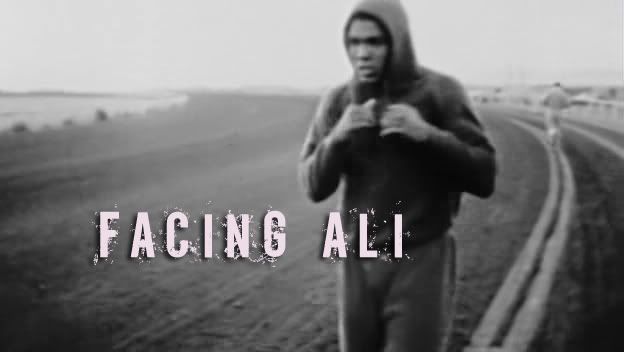
PCP's Movie Pick for January: Facing Ali (2009)


There was no more polarizing figure in boxing in the latter half of the last century than Muhammad Ali. Presently, he is mostly looked upon with a fond reverence, as a religious elder in the Islamic community, as an activist in the civil rights movement. Ali is a legend, to be certain, larger than life, yet very much human. He had his strengths and his weaknesses, just like anybody else. For a greater insight into the man behind the legend, and those who were affected by him, check out the 2009 documentary Facing Ali, my movie pick of the month for January.


Facing Ali (2009)


"The first Ali fight gave me a chance to give my son more food, better clothes. A fight with Ali gave me a chance at life, period." - Ken Norton

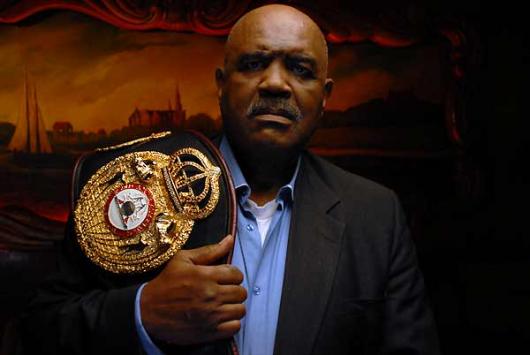
 "He found a reason to fight for other than money and championship belts. When a person finds something like that, you can't hardly beat them." - George Foreman

 "If there ain't been no Ali, you think you'd be here talking to Ron Lyle? About what?" - Ron Lyle


Ali first won the heavyweight world championship title at the 22 years of age with it captured the hearts and minds of his fans, and carried a lot of influence with his new-found celebrity. Unlike other boxers of his era who mostly spoke using their fists, he portrayed an outspoken grandiose personality. He able to use his words quickly and sharply, and would talk circles around his opponents in interviews, at press conferences and at weigh-ins. But he also had the talent to back up his words; He could fire his hands as lighting-fast as his trash talk. He also had his finger on the pulse of the public consciousness and would often make controversial statements in the media, particularly around race-relations at the time, the civil rights movement, and his opposition to the Vietnam war. These were things that boxers, who usually come from the lower rungs, the uneducated lower classes of society, simply didn't talk about and it made him a polarizing figure in America, equal parts loved by his fans, the marginalized, and oppressed and hated by those in the establishment.

There have been many great books, movies, and documentaries made about the life and boxing career of Muhammad Ali. If you get a chance, you should check out Academy Award winning When We Were Kings (1996), arguably one of the best boxing documentaries of all time, documenting Ali's legendary 1974 victory over George Foreman in Kinshasa, the so-called "Rumble in the Jungle". Ali has been on the cover of Sports Illustrated more than any other athlete in history. He represents a true cross-over star in the boxing world. To say that there is no figure in Muay Thai that is an equivalent to Muhammad Ali would be an understatement; There is no figure in any sport that is his equivalent. I can't say how many of your grandmothers were big boxing fans when they were younger, but I can guarantee that they knew who Muhammad Ali was.


Facing Ali provides a unique perspective on Ali as a fighter and as a person. It presents a portrait of the man not from interviews with and news clips about him, the path that many of the documentaries about him tend to take, but from present day interviews of 10 of Ali's opponents. The general story of Ali winning the title vs Sonny Liston, being stripped of it and suspended for refusing to serve in the Vietnam war, making a comeback and becoming the first man to become a 3-time Heavyweight champion, and his eventual decline are all provided through short clips, but serve as background to the meat of the documentary.

I don't know about anybody else, but I could listen to an old fighter tell stories about their fights for hours. Even if the fight was 30 years ago, they still tell it in such vivid detail that you swear it just happened this
morning. They remember which shot landed, which shots missed, which ones hurt and which ones didn't. They remember what their corner told them before the fight started, the cheap shots that nobody saw, and what the ref said to them at the center of the ring. The interview material provided by Facing Ali is absolutely fascinating. The varied perspectives and background stories of each of Ali's opponents before they fought, and the trajectory of their lives afterwards makes it clear that their lives are now divided into two parts: before and after they faced Ali.


Some of the segments are very entertaining. Henry Cooper and George Foreman are excellent story tellers with great insight into their fights with Ali and the effect of them on their careers. Others have a more touching and hard hitting story to tell. Ken Norton discusses how his fight with Ali pulled him out of poverty and put him in a position to provide for his family. And I challenge anybody here to watch Canadian fighter George Chuvalo's moving interview without wanting to cry, at least a little. Both Foreman and Chuvalo provide interesting behind the scenes information about the politics of the fight game in the 60s and 70s that are often glossed over (Chuvalo pulls no punches, particularly when discussing the mafia influence on the business side of boxing and with Sonny Liston taking a dive in his second fight with Ali). But the one thing that is clear across the board from everybody featured in Facing Ali is how much respect that they had for the man who was a game-changer for boxing. Time seems to have healed the wounds inflicted on Ali's opponents by his trash-talk and they all seem to look back at him with great reverence. Even Joe Frazier, who still seemed a little annoyed in 2009, still demonstrates respect for him.

A critique of this film that could be made is that it doesn't capture a clear image of Muhammad Ali himself, but I believe that to say that would be to miss the point. The image of him is filtered through the lens of 10 different fighters who encountered him at 10 different points in time. It varies from invincible to beatable, superhuman to worn out, lightning fast reflexes to weathered and hitable. Everybody's perspective is coming from a vastly different place. Although he's the central figure, this movie is not really about him. It's about the men that he fought, and the image of them that it captures is crystal clear.


Sorry, this one isn't on Netflix, but it is available on Dailymotion in 2 parts:
Part 1- http://www.dailymotion.com/video/xj90dk_facing-ali-part-1-of-2_sport
Part 2- http://www.dailymotion.com/video/xj90f6_facing-ali-part-2-of-2_sport

Wednesday, December 2, 2015

PCP's Movie Pick for December: The Boxing Girls of Kabul (2012)

Okay, so kind of a tough one to watch this month but well worth it. It is relatively short, coming in at a little less than an hour. That being said, it is an incredibly engaging, at times heart-wrenching look at the realities of life for women simply looking to live their lives in an oppressive state. Like last month's choice, you will feel soft after watching this documentary, however for a completely different reason.


The Boxing Girls of Kabul (2012)

"It was the first time I had seen a ring, and there I was climbing into it."

"The other boxers aren't sad, they have no sorrows. No one threatens them. They are very free."


 The Boxing Girls of Kabul is an absorbing look at the lives and training of the Afghanistan's Womens' National Boxing Team. It focuses on two sisters, Shabnam and Sadaf Rahimi, as well as their close friend Shahla Sikandary as they train and prepare themselves for amateur boxing competition. Their head coach is a man named Sabir, a progressive minded man who had Olympic aspirations before the Soviet war in the late 1970s. They train at the Olympic Stadium in Kabul, an ominous stadium that was used for public executions by the Taliban when they were in control of the country, less than 20 years ago. Although the Taliban no longer rules, they are still present in the country in the form of a hidden insurgency and remain a serious threat and source of fear. They attempt to compete at an international level, however they find themselves seriously outmatched by better funded and trained teams. Upon their return home, the athletes and trainers are subjected to death threats, not only themselves but their families as well.


The determination and will of the fighters in The Boxing Girls of Kabul are a wonder to behold. They are drawing upon a very limited talent pool. They have no ring. They have very little equipment and time to train. There is no amateur boxing circuit in their country, so there is no entry level competition, meaning they are put in deep at the highest level of amateur boxing right way. They live in constant fear that those less progressive could attack or even kill them and their families. A brother of one of the girls explains that he doesn't like that she boxes because he fears that, should the Taliban take control once again, they will kill her and everybody in their family. Another of the girls is told by a man who recognized them from the news that he would kidnap her if he ever saw her alone on the street. The head coach believes that a man nearly shot him on the street because he trains girls to box.


Yet despite all this, they don't stop.


 Although The Boxing Girls of Kabul is only 52 minutes long, it stayed with me for a long time after watching it. It is multi-dimensional in its effect. It had me considering how privileged I am to be able to train and fight at my leisure (next time you complain about no showers at the gym, think of this movie). It gave me a sobering look to everyday life in a country where women were not even allowed to go outside until a few years ago, full of instability and unrest. It showed me will, resolve, and determination to be free at their purist. And finally, it had me asking myself this complex question: Would I still train and compete in my chosen  hobby if it meant that my family would receive death threats?

Please watch this film. It's available on Netflix.


Wednesday, November 4, 2015

PCP's Movie Pick for November: Blessed with Venom (2011)

For those few of you who don't know who he is, John Wayne Parr is an Australian Muay Thai fighter who has been around the block. He's a 9 time professional world champion and has pretty serious list of murderers on his fight resume. He's fought Thai legends like Orono Por.Muang Ubon, Yodsanklai Fairtex, and Buakaw Por Pramuk, as well as tough foreigners like Jean-Charles Skarbowsky, Mike Zambidis, Marco Pique, and Cosmo Alexandre. He's been fighting for over 20 years and has amassed over 120 fights in this amount of time. His style was not always the prettiest to look at, and his results were mixed, but regardless he always shows up to fight.

 Blessed with Venom (2011)

"I don't think it matters if you win or lose. They're more worried about if you're going to stand there toe-to-toe, and get cut, and get hurt, but keep coming forward and keep trying your hardest. That's worth more than winning."

"So many foreigners....would get the tiniest nick and they would pretty much quit on their stools....Whereas I'd watch the Thais and they would have half their head missing and couldn't get out there fast enough to try and redeem themselves."


 Blessed with Venom is a documentary about Parr's career that was released in 2011 and circulated around various film festivals. It gained more popularity earlier this year when Parr got the rights to the film and put it up on his YouTube channel in it's entirety (That's right, this is a free one). It follows the early stages of his career coming up as a professional fighter in Thailand in the 90s. It's an inside look into the training and fights from Parr's perspective directly. He talks the viewer through several fights, including his battles with Yodsanklai Fairtex. He visits the camps that he trained at in Thailand, reunites with his old trainers, and elaborates on the hard conditions that he lived through in order to become a world class Muay Thai fighter. He also gives a tour of the old Lumpinee stadium while reminiscing about his times fighting there. You will definitely feel soft watching this movie.


 Prior to watching this documentary I was not the biggest fan of JWP as a fighter. I knew he was a tough guy, but I didn't see his style as something that I would want to emulate in my own training. But after watching Blessed with Venom, I have significantly more respect tor him. His will is unbreakable, and he will fight hard through anything in order to blast his opponent. He's also an exceedingly likeable, down-to-earth guy, so I didn't mind spending an hour-and-a-half listening to him narrate the story of his career and give an inside-source explanation into fighting on the world stage while undergoing his own personal trials and tribulations.

 Full Movie:

Saturday, October 3, 2015

PCP's Movie Pick for October: Goon (2012)

My movie pick for October is a less challenging film to watch than last month's. It's definitely funnier and more crowd pleasing, but there's definitely some things in there to pay attention to.


Goon (2012)

 "I'm here to do whatever they need me to do. If they need me to bleed, then I'll bleed for my team."


Alright, alright, hear me out for a second on this one. On the surface this film looks like a goofy sport's comedy starring Stiffler from American Pie, American Pie 2, American Wedding, American Reunion, American Pie: The Reckoning, and American Pie in Space, but if you actually take the time to sit down and watch it there's way more to it than you might think. Beneath the story of a bouncer turned minor league hockey thug, there's deep themes of loyalty to your team, respect for your opponent, and a recurring theme that comes up time and time again at YMT when discussing the extra "it" factor that makes good fighters great: Grit.


Goon stars Sean William Scott as Doug Glatt, a kind-hearted, simple-minded bouncer who never really knew his place in life until, after knocking out an angry player at a hockey game, it is discovered that he's "been bless with the fist of God". Thus, he is convinced to try out for a minor league hockey team to fill the position of enforcer. His grit, determination, and willingness to fight for his team (taking serious damage if necessary) gets him noticed, and he is soon drafted to a Triple A hockey team to protect their star player. Glatt's main opposition comes from Ross "The Boss" Rhea (played by a scene stealing Liev Schreiber), a veteran enforcer on the verge of retirement. Rhea is considered the scariest player in the league, and represents the old guard of enforcers. Spoilers: The two end up fighting in the last game of the season. Now, what stands out to me about this movie is how these two characters, despite being made into rivals by circumstance and pressure (a newspaper article titled "Why Doug Glatt and Ross Rhea Must Fight", for example), still have the utmost respect for each other as athletes and understand that fighting each other is their job, and not at all personal. I'll let you draw your own parallel's between that and our sport.

Plus the locker-room banter in this movie is hilarious. Check it out, if you've never heard of it then you won't be disappointed.


Tuesday, September 1, 2015

PCP's Movie Pick for September: Whiplash (2014)

Ok, so I'm going to start recommending some movies on the blog in order to stimulate your minds and challenge the way you think about training, fighting, competing, martial arts, or whatever the case may be. My picks might not necessarily be fighting movies (although there will likely be some of those too). Some will be fun, while others will be a little more thought provoking.


Whiplash (2014) 


"There are no two words in the English language more harmful than 'good job'."


That being said, my first pick is Damien Chazelle's Whiplash (2104) staring J.K. Simmons as an ends-justifies-the-means music teacher at a prestigious New York music school, and Miles Teller as the student who aspires to be one of the greatest drummers ever. What follows is a tense, complex, uncomfortable examination of the demands, sacrifice, and drive required to be great. It is a challenging movie, as it illustrates the delicate relationship between a teacher (or coach) and their student, and how toxic it can become under the wrong circumstances. It doesn't shy away from showing the psychological consequences of toxicity. J.K's character believes he is pushing people "beyond what is expected of them" otherwise he is depriving the world of the next great musician. His demanding, obsessive approach is as effective as it is problematic. This film shows taking this particular path to greatness can essentially ruin your life.

Whiplash is definitely a movie to check out if you have aspirations of becoming world class at anything, really.There are definite parallels between this movie and fighting. Floyd Mayweather, for example, didn't have a much of a childhood, never worked any part-time jobs, and dropped out of school in order to become the best boxer alive. You don't necessarily have to approach coaching in the psychologically damaging way that J.K Simmons does in Whiplash, but there are definite sacrifices to be made.